Thursday, February 24, 2011

Sightseeing in Australia - 4

I'd hate to count the number of hours I've spent walking the streets of inner city Melbourne with my camera. I visit at least once a year and regardless of the weather, I find endless inspiration in the people, the buildings, the colour, the movement - it never stops. It's easy, it;s familiar - yet at the same time, different enough from New Zealand to be endlessly interesting to me. I usually stay at the small commuter town of Woodend, an hour north of Melbourne on the main train commute. From there, I either train into the city, or I leap in the car and drive for miles and miles and miles, around rural Victoria, exploring the many small towns and villages along the way. Some days, when Victoria winds up the temperature, it can be an arduous business - but nothing air conditioning or a wound-down car window can't fix These Aboriginal shields were part of a stunning display at the Museum of South Australia in Adelaide. I spent a long time here and had time permitted, I would have made a return visit.
I photographed this local couple outside the Eulo Queen, an old hotel in the tiny town of Eulo in the southwest Queensland outback. I was on my way to the opal mines at Yowah and stopped off for a short sprint around town, a natter with a few of the locals and a peek inside this historic hotel.

Tuesday, February 22, 2011

Barry's Provocative Unpublished Minutes - 125

"Cross Pollination"
A new work from one of New Zealand's top printmakers.
For more in this ever-changing ongoing series, click on Cleavin in the label line below this post.

Monday, February 21, 2011

Seeing the Light

It's a while since I've photographed this now famous David Trubridge lighting design, Coral/Floral. But here it is en masse in a Christchurch store. To see the many other ways I've photographed this design, click on Trubridge in the label line below.

Saturday, February 19, 2011

Friday, February 18, 2011

City Scene - 15

Like most cities, Auckland is ever-changing. Many of its old buildings have been demolished to make way for the new. This is one old beauty that I always smile at - just off Karangahape Road.

Thursday, February 17, 2011

Sightseeing in Australia - 3

This, people, is the famous Hanging Rock of the book and movie fame, "Picnic at Hanging Rock." It's located close to the Victorian town of Woodend, about an hour north of Melbourne, that I visit every year to see family. While the story in 'Picnic at Hanging Rock' is fictional, there is definitely something about this place - or maybe it's because I found it hard to separate the fiction from the fact. Either way, the first time I visited, I kept walking around and up the mysterious rocky outcrop half expecting to see the ghosts of schoolgirls. The school that features in the story by the way, is based on a real school not too far from the rock. Today there's a large domain here - and a racecourse - and it's a popular family picnic spot, complete with numerous quite tame kangaroos that hang about. Back in 2008, I took part in a camel wagon trek in the Southeast Queensland Outback area, in and around the tiny outback town of Cunnamulla. It was the beginning of one of my best trips to Australia. I've written about the trek several times already on this blog (put Cunnamulla, outback or camels into the search box for more) so I won't prattle on about it again - other than to say, if you ever get the chance to get into the Outback don't miss it. It's where you get to meet the 'real' Australians, the ones who have taken that vast, ruthless land and tried to tame it for their own - and their country's ends. It's an endless battle of wits, stamina and hard labour that breeds a special kind of crazy, raw, hilarious bunch of people that I loved.
When I visited Brisbane last - also 2008 - I was stunned to see how the city had grown since my previous visit. Construction was in full swing and there were cranes at work all over the city. There was a very positive vibe about the place that I found quite energising - and fresh out of the Outback, I was a little dazed and awestruck by both the vast numbers of people and dwellings. I can't imagine how the city must look now, after the recent devastating Queensland floods and Cyclone Yasi's aftermath, but hopefully, the resilience of those Queenslanders will have the place looking bright and sparkly again soon. It's not as though they're strangers to the tyranny of weather after all.
Adelaide 2007 - another terrific trip. I'd heard so much about Adelaide for so many years, I never knew what to expect. But I adored the place. It's such an easy city to get around. It's small and very very cosmopolitan. Factor in its proximity to vast wine regions, the Adelaide Hills and the stunning Fleurieu Peninsula and there's every reason to put it near the top of your Australian Must-Visit list.

Tuesday, February 15, 2011

Friday, February 11, 2011

City Scene - 14

Few things get my (photographic) attention faster than a mass of words and graphics and you can always rely on a busy New Zealand dairy to deliver a crazy visual mix. I photographed this one in Christchurch. It's from my ever-expanding series on NZ dairies.

Thursday, February 10, 2011

Sightseeing in Australia - 2

Interior: The Eulo Queen, Eulo, Outback, Southwest Queensland, 2008.
One of my best Aussie adventures yet, took me to the Outback region of Southwest Queensland - ten days of unbridled madness and fun. Outback life is raw, rugged and rough - a fantastic place where people pitch together in their battle against the trying forces of nature. Snake-handler. Kyneton, Victoria, 2008. For New Zealanders, there is a wonderful familiarity about a lot of Australia, yet that's always offset by significant differences - like snakes for instance! I took this shot at the annual Kyneton Country Fair, the equivalent of our A&P Shows I expect.
Bendigo, Victoria, 2009 I drove up to Bendigo one day when I was staying just north of Melbourne. It was - or is normally - a two-hour trip but I stopped at every little town and village I passed along the way. And the closer I got to Bendigo, the hotter it got, so that when I finally arrived around midday, it was 39-degrees and I was sweltering. But I adored Bendigo. It was one of Australia's richest cities during the gold rush and that early wealth is reflected in much of the astonishing architecture.
Adelaide Hills, Adelaide, South Australia, 2007.
I flew over to Adelaide with a photographer in 2007, on a writing mission for Air New Zealand's magazine, Kia Ora. It was a brilliant 5-6 days spent exploring the city, nearby Adelaide Hills and the magnificent Fleurieu Peninsula. I'd heard a great deal about Adelaide in the year's prior, mostly that the city was designed by the same urban planner who designed the layout for Christchurch; and I have to say I wasn't disappointed. I'd move there in a heartbeat.

Tuesday, February 8, 2011

Barry's Provocative Unpublished Minutes - 123

"The Purpose of War is........"
Comments on Conflict
From one of New Zealand's top printmakers.
Click on Cleavin in the label line below to see more in this series.

Monday, February 7, 2011

Taking to the Air

Tickets have gone on sale for the 14th Warbirds Over Wanaka International Airshow 2012 at Wanaka Airport. Both the flying and ground programmes are currently being drawn up and aviation lovers are in for all sorts of action over Easter 2012. It's also the 75th Anniversary of the RNZAF and their work over the past decades will be celebrated at the Warbirds show.
Check the websit for further updates as they come to hand.

Saturday, February 5, 2011

Friday, February 4, 2011

City Scene - 13

I was very drawn to this Auckland shop window - for all sorts of reasons - the graphics, the retro furniture, the colours, the mix of forms and colours. I can't remember which suburb Zeitgeist was in - Grey Lynn I think - but if you're in Auckland and have an interest in retro furniture and household accessories, it's a must-visit.

Thursday, February 3, 2011

Sightseeing in Australia

Brisbane, Queensland. 2008
I Love Australia!
Every part of it.
Everything about it.
Castlemaine, Victoria , 2009.

Tired of long haul flights to Europe and North Asia, I have, these past four or five years, devoted at least one trip a year to some part of Australia. I've visited many times prior to that of course, but I see it differently now - not just as a quick jaunt across the Tasman to something familiar but as a vast country that most New Zealanders (and many Australians) never see anything but a minute portion of. So I have been making it my business to move beyond the obvious east coast cities and venture out into the wider country. Suffice to say, that in the last five years, I have already amassed thousands of photographs taken in various parts of Australia - there are even more thousands on slide film that I have yet to digitise.

Cunnamulla, Outback, Southwest Queensland, 2008. Melbourne, Victoria. 2009. So, rather than leaving them tucked away in my computer files, I've decided to give some of them an airing in a new blog series "Sightseeing in Australia." It's going to be a mixed bag. People, places, the weird and the wonderful. Consider it a mini sightseeing trip. And it begins here. And if anything interests you, click on the location in the index line below the blog, because I guarantee you'll find more.

Tuesday, February 1, 2011

Barry's Provocative Unpublished Minutes - 122

"The Challenge."
New Zealand printmaker Barry Cleavin takes a wry look at the national sport.For more in this series, click on Cleavin in the label line below

Monday, January 31, 2011

The Clubhouse - New Zealand Architecture

Cashmere Tennis Club, Christchurch
Cashmere Bowling Club, Christchurch
The New Zealand clubhouse is much more than another architectural variant.
The clubhouse encapsulates a thick slice of New Zealand sociological history.
It is a place ingrained on the New Zealand psyche - a place for many, around which everyday life revolves.
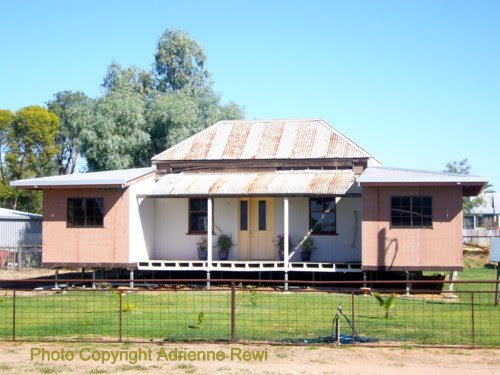
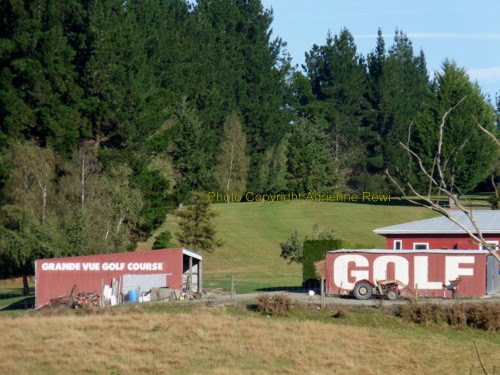
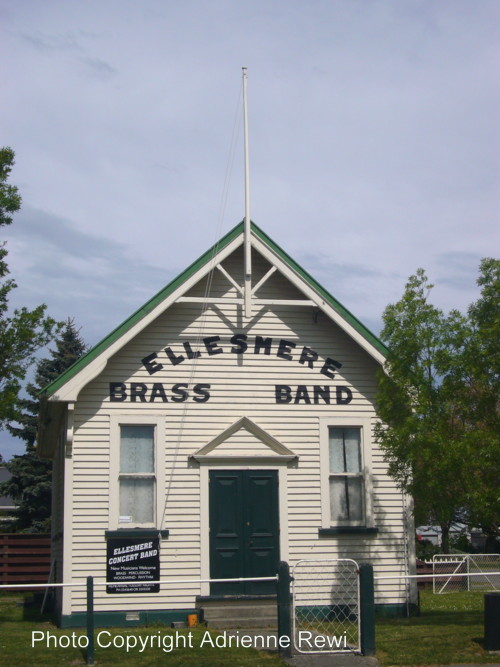
Geraldine Golf Club, Geraldine, South Canterbury Ellesmere Brass Band Rooms, Leeston, Canterbury
In my own lifetime thus far, the only clubs I've belonged to have been a tennis club and a netball club and once, temporarily, when all reason departed, a badminton club. It goes without saying that the latter was not a success. I quickly discovered that being good at tennis doesn't necessarily equate to being good at badminton and a few weeks later, crippled by humiliation, I creapt away. but that's a different story........
North Otago Billiards & Snooker Assn, Oamaru Mackenzie Squash Club, Fairlie, South Canterbury Rangiora Bowling Club, Rangiora, North Canterbury Much more recently, my interest in clubrooms and clubhouses has been revived, not from a participatory point of view but for what they mean and contribute to New Zealand society. I find myself 'digging around' small-town New Zealand in search of those quaint old buildings that have, and still do, contribute so much to the communities they sit in. Of course, like-minded people have been forming clubs since Ancient Greek times, so I shouldn't be suppose that these old buildings and the people that haunt them will all be gone in another hundred years; but it does seem they're too often overlooked and that an interest in joining clubs has been superceded somewhat by lazier pursuits - like sitting in front of television or computer games. Railway East Smallbore Rifle Club, Central Christchurch
Temuka Boxing Club, Temuka, South Canterbury I find myself increasingly intrigued by the notion of clubs, by the reasons people form these busy little clusters that, in many cases, rule their lives. Whether they be sports clubs, or clubs for musicians, hobby groups, political, military or religious groups, gentlemen's clubs or arts clubs, you'll always find a core of zealous (sometimes over-zealous) locals who give up umpteen hours of their own time to make sure their club runs smoothly (and that everyone obeys the rules). I find something hilariously funny and yet, at the same time, something poignant and innocent, in that. I may well be getting sentimental and silly as I get older but times do seem to be changing. The clubs and those hard-core club members are still there - especially in small, more isolated towns - but many modern families have different priorities these days and with far more social and leisure activities available, they're much more able to find their own amusement, without feeling the need to join clubs.
Woodend Bowling Club, Woodend, Victoria, Australia
Woodend Bowling Club, Woodend, Victoria, Australia I'm equally intrigued by the buildings that clubs occupy, or build for themselves.
The grand bowling clubs (I swear there are more bowling clubs in New Zealand than anywhere else in the world; almost every town has one, many have more), the cute little 'halls,' the solid brick edifices that allude to far grander activities than reality presents - they're all there. The golf club is another favourite - you'll find those all over New Zealand too, based in anything from a huge, modern edifice to a rickety, corrugated iron shed clinging to the edges of some tiny town. Some clubs are 'open-doored' and easily accessed; others are virtually windowless with an air of secrecy and privacy that their close-lipped members seem to encourage. I find it all fascinating.

Friday, January 28, 2011

Dolphin Spotting

If you're looking for things to do in Christchurch, you don't have to go far - just over the Port Hills, in Lyttelton (New Zealand's third largest port), you'll find the team at Black Cat Cruises ready and waiting to take you out on the water with their Christchurch Wildlife Cruise. A couple of days ago, I did just that. I'd been lured along with the promise of sightings of the rare Hector's dolphins and a two hour cruise around Lyttelton Harbour. The sun was shining, the skies were blue and I couldn't find any good reason to decline. I was joined by about 22 others - mostly tourists from assorted European and Scandanavian countries, and a couple of Japanese girls.
It's always intrigued me that Lyttelton Harbour is actually the crater of a massive volcano that erupted eons ago. You can still see evidence of that in the cliffs (crater sides) around the harbour (see bottom image) and the boat's crew are very good at pointing out the best of the geological features along the way. Here in Canterbury, we're quite tuned into natural disasters at the moment and it was interesting to see how the 7.1 earthquake on September 4th has impacted on the cliffs around the harbour. More immediately, on the little lighthouse that sits in the inner harbour (above). It's now on a distinct lean after its foundations were shaken loose in the earthquake.
And so to the dolphins. I must point out that although we did see Hector's Dolphins on the trip - just three - my photographs of a few fins poking out of a vast expanse of water are simply too embarassing to display here, so many thanks to Black Cat for the loan of these stunning images. As they point out, they have hundreds and every one of them is beautiful.
The Hector's Dolphin - Tutumairekurau in Maori - is native to New Zealand and is one of the smallest and rarest dolphin species in the world. They grow to about 1.2m (4ft), which is significantly smaller than the Bottlenose Dolphin, which grows up to 3m in length, or roughly the length of a small family car. They were named in honour of Sir James Hector (1834-1907), who examined the first specimen. Born in Scotland, he was the first director of what is now the Museum of New Zealand and was New Zealand's most influential scientist of the time.
It's estimated that there are just 6,000-7,000 Hector's dolphins and around 1,000 of those live around the Banks Peninsula coastline. Our captain on the day suggested we "look out dorsal fins - small, dark and rounded like Mickey Mouse's ear," which, it has to be said, is easier said than done when you're trying to programme your camera while clinging to the boat's rails as it surges through the rolling ocean. But, as promised, right out by Beacon Rock, we spotted a trio of the little beauties, frolicking in the waves. There's something universally pleasing about dolphins. I've never quite worked out why we humans all go slightly potty over the sight of them, but I can certainly see why it happens. You just can't help smiling when they rise out of the water and swoop under the boat.
They're usually found in groups of 2-8 individuals and occasionally, several groups come together to form a large, temporary pod of about 50 dolphins. Black Cat's Lyttelton Cruise is limited to dolphin spotting but over in Akaroa they run Swimming with Dolphins cruise that puts you right in the water with them - the only place on the planet where you can swim with Hector's Dolphins. Only ten swimmers are allowed in the water at any one time and for every customer who views, or swims with dolphins, Black Cat sets aside a portion of the ticket price for research and the study of the dolphins. The also provide the Department of Conservation with daily data on the dolphins' movements and behaviour. You can find out more about that at www.adopt-a-dolphin.com
I always think it's a real shame that locals overlook great activities like this, thinking them the preserve of tourists. Unless you're a boatie, you're unlikely to ever get the chance to to experience the diversity that Lyttelton Harbour offers. Lyttelton Harbour is just one of 37 bays or inlets around Banks Peninsula and it has a rich birdlife - you get up close to spotted shag rookeries and their fascinating guano deposits (image above) - and a wealth of fascinating historical and geological points of interest from World War II gun emplacements to old quarantine stations (on Ripapa Island and at Camp Bay), historic whaling settlements - even an old prisoner of war camp on Ripapa Island, when it 1918, our most famous prisoner of war, Count Von Luckner was in residence. All up, it's two hours very well spent and there's nothing like that freeing feeling of being out on the water with the sun beating down and the wind in your hair.

City Scene - 12

Christchurch's Hagley Park is one of the loveliest city parks in all of New Zealand. Its 186 hectares sit smack in the middle of the city, providing a giant playground for the locals. I spend an enormous amount of time in there with my camera - in all seasons - photographing everything from trees and flowers to the people and the activities that go on there. It's a wonderful photographic resource to have 'on your back doorstep.'

LinkWithin

Blog Widget by LinkWithin